Modern Performance Training Requires More Than Physical Output
Strength, speed, and conditioning remain foundational to athletic performance. However, competitive sport demands more than physical capacity. Athletes must process information quickly, make split second decisions, and execute under pressure.
For coaches, this presents a challenge. Traditional drills build physical qualities, but they do not always replicate the unpredictability of competition.
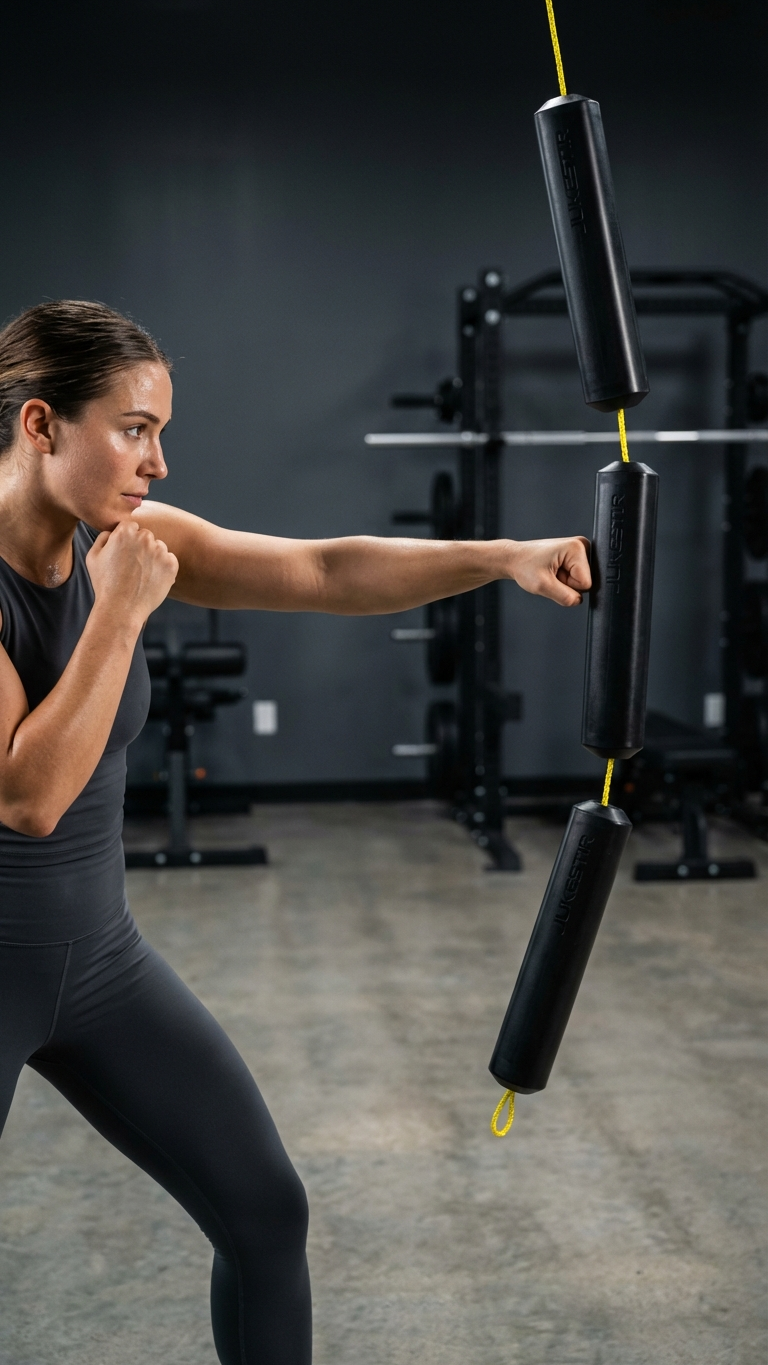
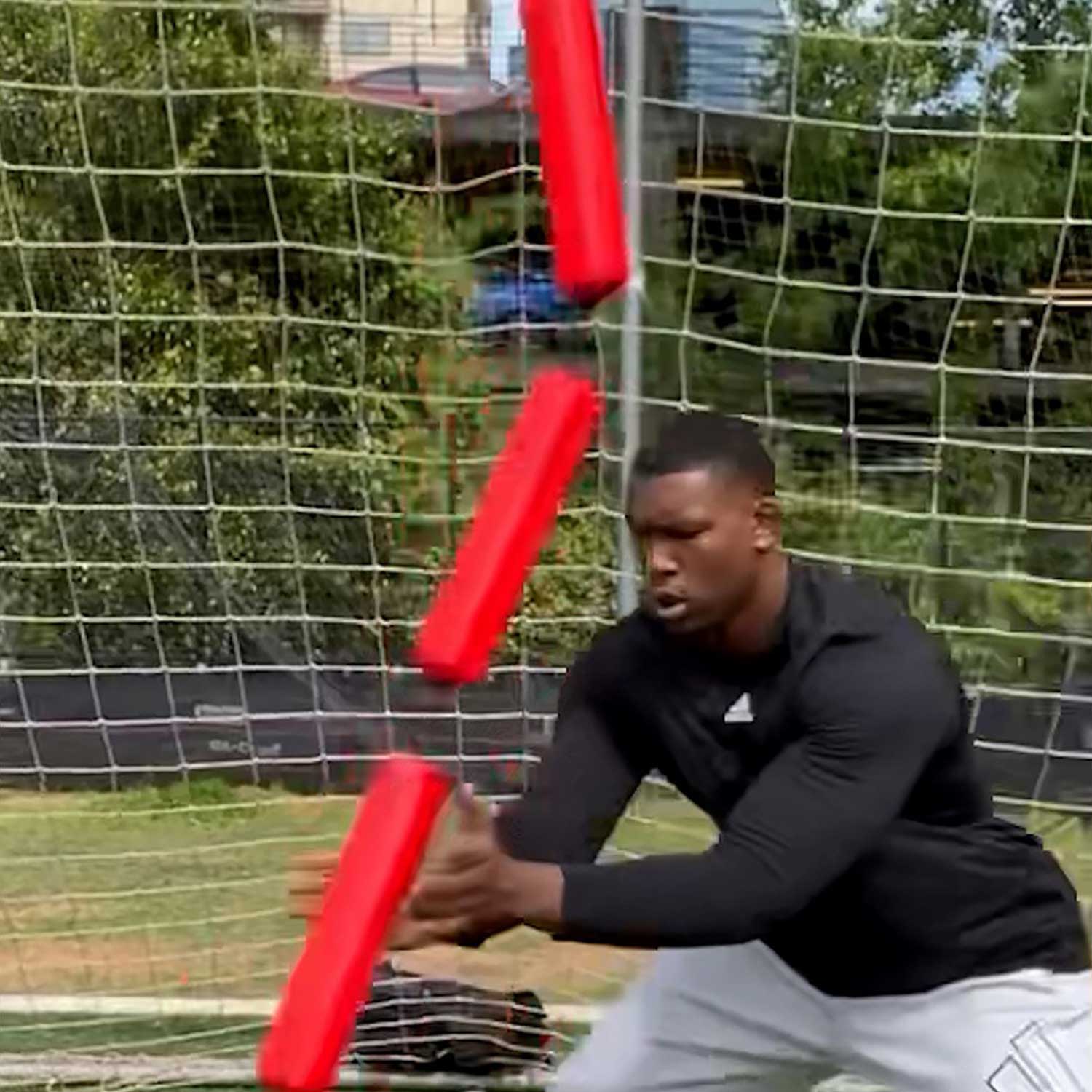
Reaction-based training helps bridge that gap. By combining cognitive processing with real time movement, coaches can train athletes to respond faster and move more efficiently in game-like scenarios.
The Performance Gap Coaches Often See
Many athletes test well in controlled environments. They lift well. They run fast in straight lines. They perform rehearsed drills with precision.
But in live competition:
-
First step reactions are late
-
Change of direction lacks efficiency
-
Decision making slows under fatigue
-
Hesitation appears in high pressure moments
The missing element is often cognitive motor integration.
Athletes need training that forces them to react, not just execute memorized patterns.
Why Reaction Time Training Matters for Coaches
Reaction time influences nearly every sport skill:
-
Defensive reads
-
Offensive spacing
-
Ball tracking
-
Counter movement
-
Transitional play
When athletes process information faster, they create separation, close space more efficiently, and reduce wasted movement.
For coaches, improving reaction time can elevate overall team speed without adding excessive physical load.
What Is Cognitive Motor Training in a Coaching Context
Cognitive motor training requires athletes to:
-
Identify a stimulus
-
Interpret it quickly
-
Choose an appropriate response
-
Execute with speed and control
This strengthens neural pathways between the brain and muscles, improving responsiveness and coordination.
For youth athletes, it builds foundational awareness. For advanced athletes, it sharpens competitive edge.
How Coaches Can Integrate Jukestir Into Training
Jukestir is a modular light-based reaction training system that can be integrated into performance sessions without disrupting existing programming.
Warm Up Activation
Use short reaction rounds to:
-
Increase neural activation
-
Elevate heart rate
-
Improve focus before strength work
This primes the nervous system for explosive performance.
Agility and Change of Direction Sessions
Instead of running preplanned cone drills, athletes react to unpredictable light cues. This improves:
-
First step acceleration
-
Lateral efficiency
-
Deceleration control
The result is more transferable agility.
Conditioning Circuits
Incorporate reaction stations into metabolic circuits to increase intensity and engagement. Because cues are unpredictable, athletes maintain higher mental focus throughout conditioning.
Position Specific Work
Lights can be placed strategically to mimic:
-
Defensive back reactions
-
Soccer footwork patterns
-
Basketball closeouts
-
Combat sport counter movements
This allows coaches to create adaptable, sport specific challenges.
Benefits for Coaches and Training Facilities
1. Increased Athlete Engagement
Athletes stay mentally invested when drills feel competitive and interactive.
2. Measurable Progression
Reaction time and response speed can be tracked and improved over time.
3. Reduced Repetitive Stress
High neural demand without excessive joint load supports in season maintenance.
4. Versatile Programming
Suitable for youth development, collegiate athletes, and adult performance clients.
5. Differentiation for Facilities
Offering cognitive motor training sets programs apart from standard strength facilities.
Supporting Long Term Athletic Development
For younger athletes, early exposure to reaction-based drills enhances coordination and spatial awareness. This supports:
-
Multi sport adaptability
-
Movement efficiency
-
Injury risk reduction
For advanced athletes, reaction work refines decision making under fatigue, a critical factor late in games.
Coaches who train both physical and cognitive speed prepare athletes for real competition demands.
Managing Load and Recovery
One challenge in performance programming is balancing intensity with recovery. Reaction-based sessions provide high neurological stimulation without excessive mechanical load.
This makes them useful:
-
During deload weeks
-
As active recovery sessions
-
During congested competition schedules
Athletes stay sharp without accumulating unnecessary fatigue.
Building Competitive Confidence
Confidence grows when athletes feel prepared. When players consistently train reactive decision making, they reduce hesitation in competition.
Reaction-based drills:
-
Increase decisiveness
-
Improve anticipation
-
Enhance situational awareness
These traits are difficult to build through strength work alone.
Why Coaches Should Consider Reaction-Based Tools
The modern athlete competes in fast, unpredictable environments. Training should reflect that reality.
By integrating reaction-based tools into programming, coaches can:
-
Improve transfer from training to competition
-
Increase session intensity without extending duration
-
Enhance both physical and cognitive performance
The result is athletes who move faster, think faster, and adapt more effectively.
If you are a coach looking to sharpen reaction time, agility, and cognitive motor performance, reaction-based training offers a powerful addition to your programming.


Leave a comment
All comments are moderated before being published.
This site is protected by hCaptcha and the hCaptcha Privacy Policy and Terms of Service apply.