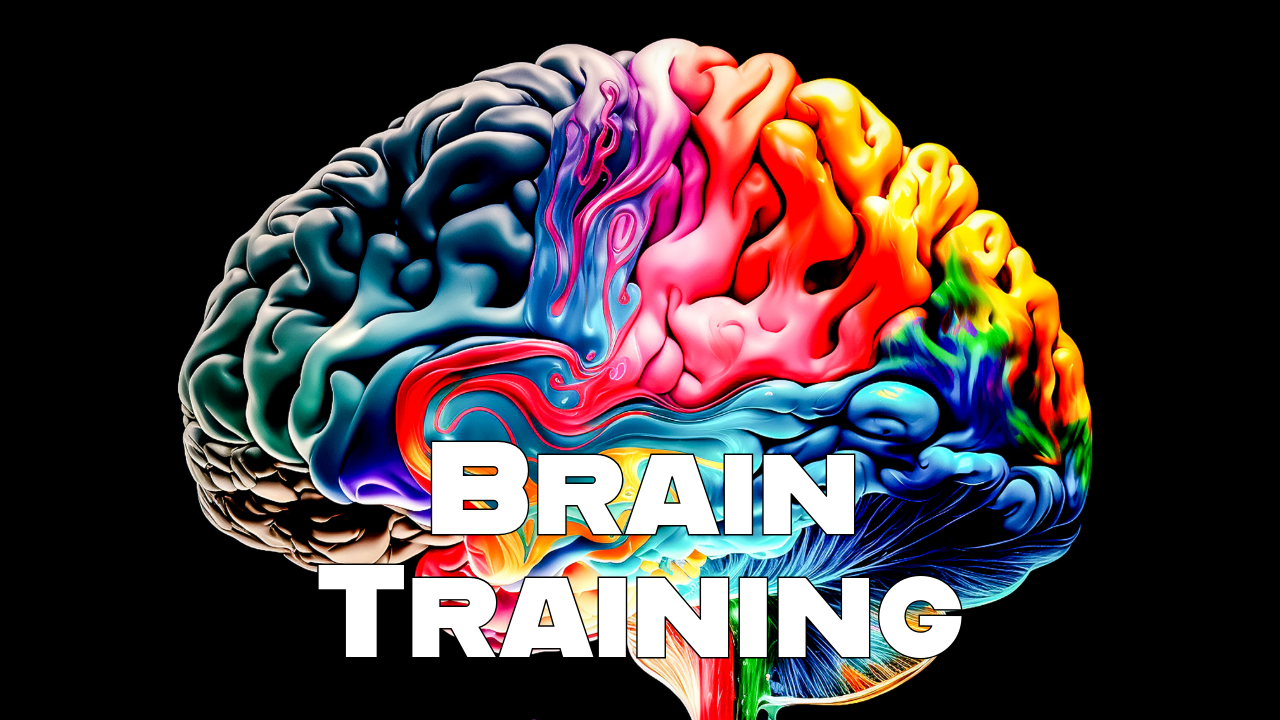
Nike's New Promise: Mind-Altering Shoes?
Athletic footwear companies are making bold claims these days. Nike's latest shoes promise to "activate the brain" and "improve concentration" through foot stimulation. Naboso sells "neuro-insoles" claiming to sharpen mental clarity.
The science behind it? Sensory receptors in your feet send signals to your brain's somatosensory cortex. More sensation = more brain activation = better focus.
Except that's not quite how neuroscience works.
As Dr. Atom Sarkar from Drexel University recently explained in Forbes, "Brain activation alone does not equal cognitive enhancement." Feeling more sensation doesn't mean your brain's attention systems are working better.
But here's what neuroscience does support: unpredictable stimuli that demand real-time cognitive processing.
And that's where the conversation gets interesting.
The Problem With Passive Stimulation
The issue with textured insoles or sensory footwear isn't that they don't work—it's that they're passive.
Your brain is designed to filter out predictable, repetitive sensory input. It's called sensory adaptation. Touch the same textured surface repeatedly, and your brain stops paying attention.
This is why neuroscientists distinguish between sensory modulation (changing what you feel) and cognitive enhancement (improving how you think).
Nike's shoes might change sensory input. But there's little evidence they meaningfully improve concentration in healthy adults.
Why? Because your brain needs more than sensation. It needs challenge.
What Actually Changes Your Brain: Unpredictability
If you want to understand what genuinely alters brain function, look at the research on prediction error.
Your brain constantly predicts what will happen next. When reality doesn't match the prediction, your brain fires a "prediction error" signal. This is when learning happens. This is when neural pathways strengthen.
Predictable stimulus = Brain ignores it
Unpredictable stimulus = Brain engages fully
This principle underpins everything from motor learning to cognitive training to rehabilitation after stroke.
And it's exactly why unpredictable movement training works where passive sensory stimulation doesn't.
Enter: The Coordination Bag
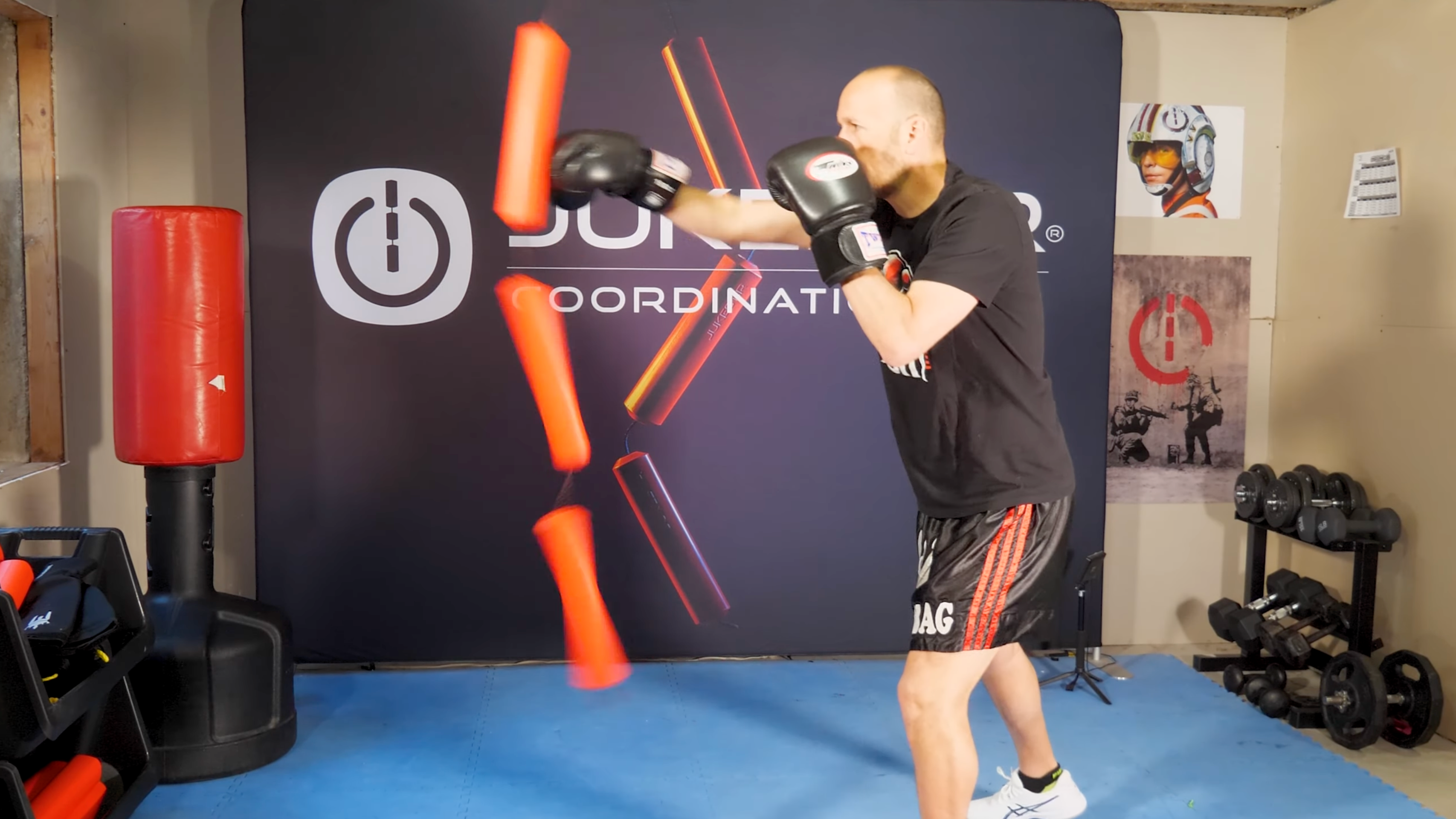
I didn't set out to create a "brain-training device." I built Jukestir to solve a simple problem: traditional punching bags don't train footwork or reaction time.
But what happened next surprised me—and validated by neuroscience research.
The bag moves unpredictably. Every punch creates a different response. Your brain can't predict where it will go.
This forces your nervous system to:
- Process visual data in real-time (somatosensory + visual cortex activation)
- Coordinate opposite sides of the body (cross-lateral training = bilateral brain activation)
- Adapt movement instantly (cerebellum + motor cortex engagement)
- Recover from mistakes (resilience = prefrontal cortex development)
Unlike a textured insole that your brain adapts to in minutes, every session with Jukestir presents new challenges.
Your brain can't tune it out. It has to stay engaged.
The Three Pillars of Cognitive Enhancement
Neuroscience shows three types of training genuinely improve brain function:
1. Prediction Error (Learning Under Uncertainty)
When you can't predict what happens next, your brain must process incoming data rather than relying on stored patterns.
Shoes: Provide consistent sensory input (brain adapts, stops processing)
Jukestir: Creates unpredictable movement (brain stays engaged)
2. Cross-Lateral Coordination
Activating opposite sides of the body simultaneously strengthens communication between brain hemispheres.
Shoes: Bilateral symmetry (both feet experience same thing)
Jukestir: Forces contralateral movement (left hand → right brain, right hand → left brain)
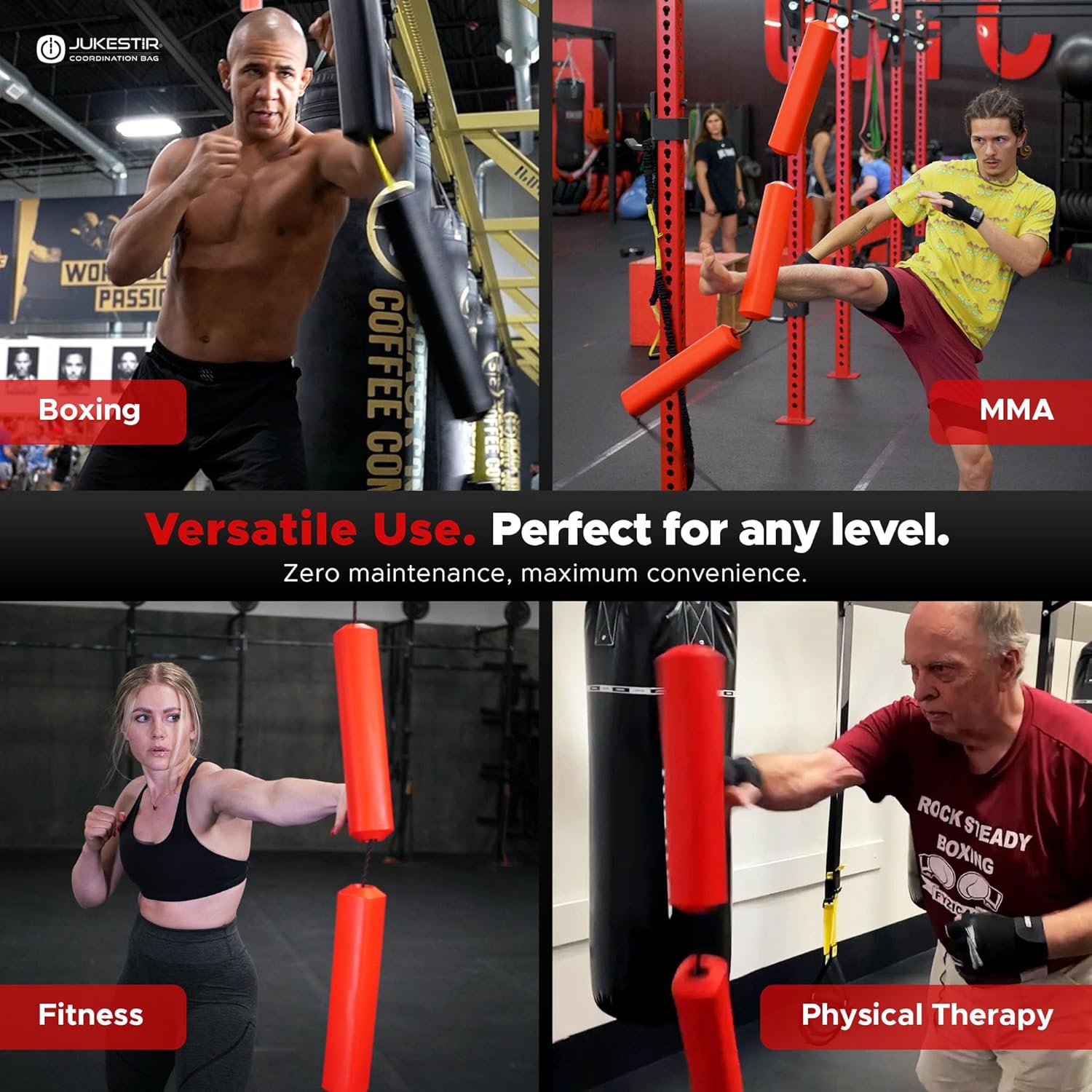
Studies in stroke rehabilitation show cross-lateral training accelerates neural pathway recovery. That's why 100+ hospitals now use Jukestir for neurological rehabilitation.
3. Error Recovery (Resilience Training)
Nike's press release mentions "resilience." But resilience isn't built through sensation—it's built through adaptive response to failure.
Missing a punch and immediately recovering trains your nervous system to handle unexpected challenges. This is active resilience training.
Feeling textured foam under your feet? That's passive stimulation. Your brain doesn't need to adapt or recover from anything.
What the Research Actually Shows
Dr. Sarkar's article correctly notes: "Changes in sensory feedback from the feet can influence how stable, alert or grounded a person feels."
True. But that's not cognitive enhancement.
What does enhance cognition? Active, unpredictable motor challenges.
A 2024 study at the University of Illinois Chicago—the largest neurological reaction-time study in the U.S.—is currently examining how unpredictable stimulus training affects:
- Processing speed
- Reaction time
- Balance metrics
- Cognitive engagement
(Full disclosure: Jukestir is part of this study. Results expected fall 2026.)
Preliminary hospital data shows patients using unpredictable movement training for 10 minutes, 3x per week report measurable improvements in:
- Balance (vestibular function)
- Coordination (motor control)
- Reaction time (processing speed)
Timeline: As little as 3 weeks.
These aren't subjective "I feel more focused" reports. These are quantifiable neurological improvements.
Belief, Expectation, and the Placebo Effect
Dr. Sarkar makes an important point: "If someone believes a shoe improves focus or performance, that belief alone can change perception and behavior."
This is the placebo effect, and it's real.
But here's the difference: Placebo effects don't build new neural pathways.
They might make you feel more confident. They might improve performance through expectation. But they don't create the structural brain changes that come from genuine motor learning.
Unpredictable movement training does.
When you train reaction time, you're not just "feeling more focused"—you're building faster signal transmission between neurons. That's measurable. That's neuroplasticity.
Where Science and Marketing Should Align
Dr. Sarkar writes: "The problem is not whether footwear influences the nervous system—it does—but imprecision. When companies claim their shoes are 'mind-altering,' they often blur the distinction between sensory modulation and cognitive enhancement."
This is where I agree completely.
Sensory stimulation ≠ Cognitive enhancement
If you want to genuinely train your brain, you need:
- Unpredictable challenges (not repetitive sensation)
- Active engagement (not passive input)
- Error and recovery (not just comfort)
That's not marketing. That's neuroscience.
The Bottom Line
Can shoes alter your mind? Maybe marginally, through placebo effects or subtle postural changes.
Can unpredictable movement training alter your brain? Yes. Measurably.
The research supports:
- Improved processing speed
- Enhanced bilateral coordination
- Better balance and proprioception
- Faster reaction times
- Increased cognitive engagement
All from 10 minutes, 3 times per week.
Not because you're feeling more sensory input. Because your brain is actively solving problems it can't predict.
What This Means for You
If you're looking for genuine cognitive benefits from your training:
Don't rely on passive stimulation. Textured insoles might feel different, but your brain adapts quickly.
Seek unpredictable challenges. Your brain grows when it can't predict what happens next.
Train reaction, not just reflection. Mirror work and shadow boxing are valuable, but they're predictable. Add elements that force real-time adaptation.
Embrace failure and recovery. Missing a target and immediately adjusting builds resilience. Consistent comfort doesn't.
The Research Continues
We're part of the University of Illinois Chicago study specifically because neuroscientists recognized something important: unpredictable stimulus training activates brain regions that passive sensory input doesn't touch.
Results expected fall 2026. But preliminary hospital data already shows what neuroscience predicts: challenge changes the brain more than comfort ever will.
References
- Sarkar, A. (2026). "Can Shoes Alter Your Mind? What Neuroscience Says About Foot Sensation And Focus." Forbes.
- University of Illinois Chicago Neurological Reaction-Time Study (ongoing, 2024-2026)
- Rock Steady Boxing Parkinson's Program outcomes data
- Cross-lateral coordination research in stroke rehabilitation (2023-2025)
Learn more about coordination training: jukestir.com
Used by UFC fighters, Wimbledon champions, and 100+ hospitals for neurological rehabilitation.

Leave a comment
All comments are moderated before being published.
This site is protected by hCaptcha and the hCaptcha Privacy Policy and Terms of Service apply.